
Pattern
Purview DLP Incident Management (IM) – From Alert to Outcome #03
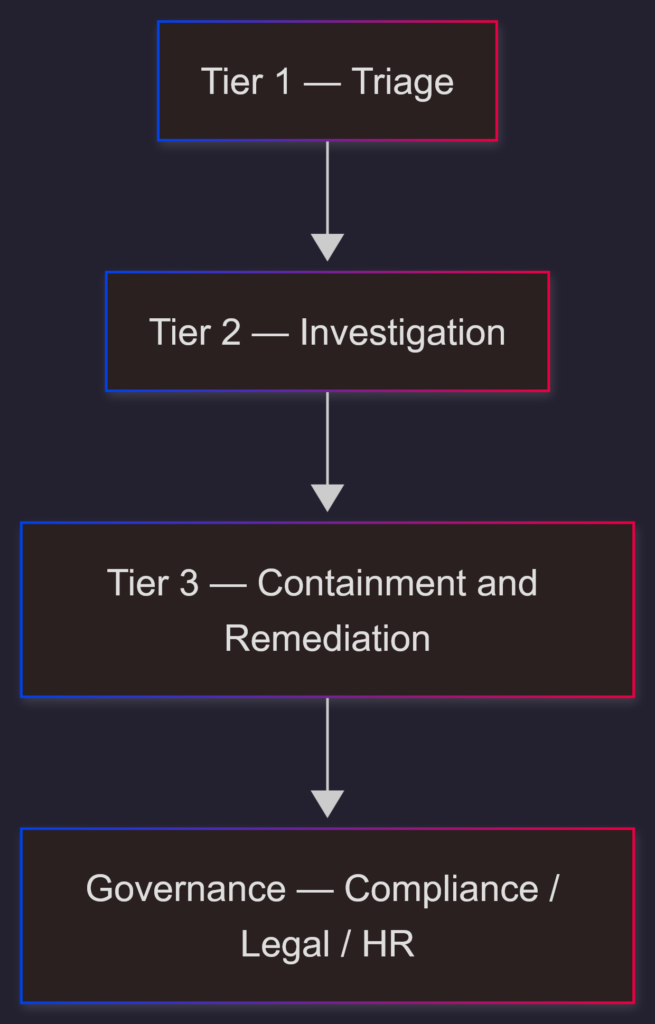
Phase 1 – Where DLP Programs Quietly Break Down The DLP SOC Operating Model. Overview DLP incidents don’t fail at the detection layer. They fail at the ownership layer. Quick...
Read more
Purview DLP Incident Management (IM) – From Alert to Outcome #02
Phase 1 – Where DLP Programs Quietly Break Down Alerts Are Not Incidents. Overview If every DLP alert is treated as an incident, then nothing is an incident. Quick recap...
Read more
Purview DLP Incident Management (IM) – From Alert to Outcome #01
Phase 1 – Where DLP Programs Quietly Break Down DLP Is Deployed. Incident Management Is Not. Overview Most DLP programs don’t fail because the policies are wrong. They fail because...
Read more
Prompt Hygiene for Enterprise AI – Part #2
The control stack (and how to prove it worked) If you want “AI governance,” you need two things: This is where a lot of AI deployments quietly fail, as they...
Read more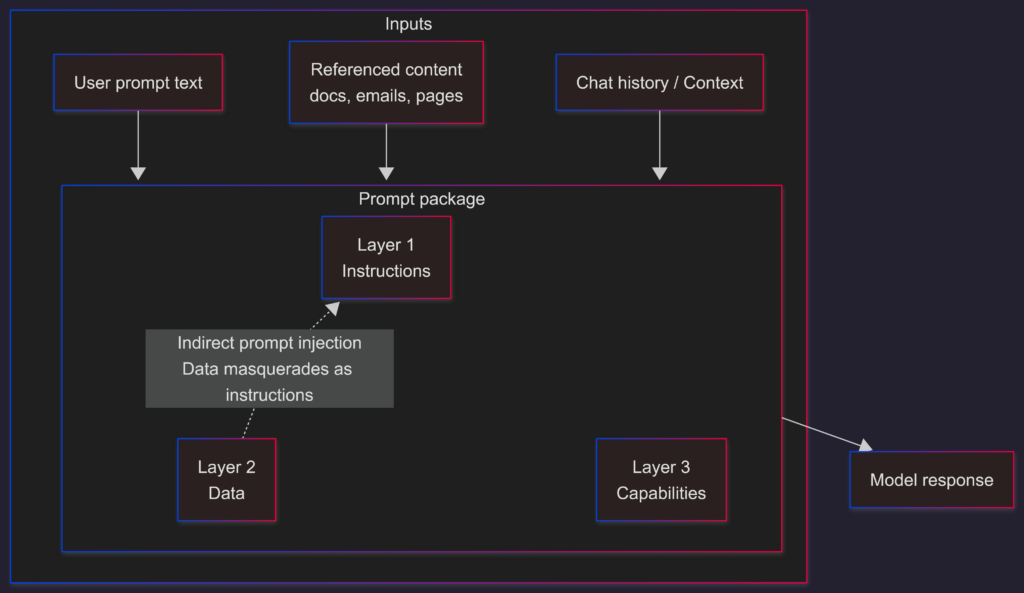
Prompt Hygiene for Enterprise AI – Part #1
The problem isn’t the model. It’s the input pipe. “Prompt hygiene” sounds like a made-up term someone invented five minutes before a steering committee. In enterprise AI, it’s simpler (and...
Read more
Attribution in Agentic Systems: When the user isn’t the actor anymore – Part #2
The pattern: User + agent + intent binding (so investigations stop being archaeology ) Part 1 ended with the uncomfortable truth: audit identity is not the same thing as agency....
Read more
Content as a Service: The Missing Layer in Modern Application Architecture
Documents, images, contracts, customer uploads, generated artifacts - content quickly becomes central to business workflows. Yet in many applications, content handling is treated as an afterthought.
Read moreAttribution in Agentic Systems: When the user isn’t the actor anymore – Part #1
Identity vs agency (and why your audit log suddenly feels… philosophical) At some point, every organization running agents hits the same moment: “Why did I do that?”“You didn’t.”“The audit log...
Read more
Purview Sensitivity Labels: The Two-Track Pattern
Stop asking one label taxonomy to do two unrelated jobs There’s a particular brand of optimism in “We’ll just use the same sensitivity labels for documents and Teams/Sites.” It’s the...
Read more